


COMMUNITY
News
Media Coverage
K-NIBRT's Entire Training Facility Equipped with GMP Standards — Capable of High-Quality Training for 2,000 Trainees a Year
- Author : K-NIBRT
- Date : 2026-07-16 11:44:06
- Views : 315
Interview | K-NIBRT Project Division Director Han Gyun-hee
"Operating the Bioprocess Workforce Training Center and the Pharma-Bio Convergence Research Center since May last year"
"Cultivating advanced domestic talent while aspiring to become a globally certified bio-training institution"
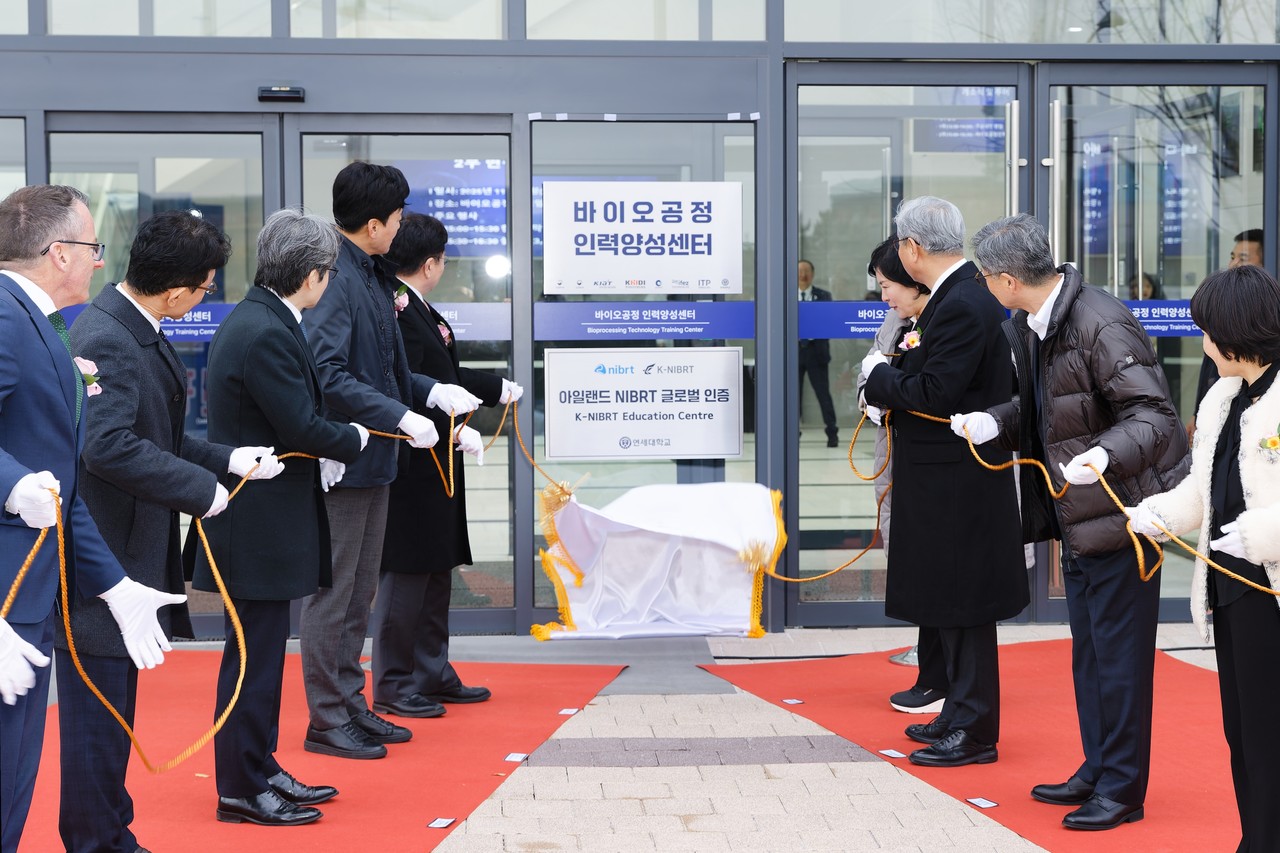
The Bioprocess Workforce Training Center opening ceremony was held on November 25, 2025.
Marking one year of operation, the Bioprocess Technology Training Center and the Biopharma Research Center, both run by the K-NIBRT Project Division, have established themselves as an inexhaustible wellspring for cultivating global bioprocess talent.
The K-NIBRT traces its origins to October 2020, when Incheon was selected as the site for the "Korean National Institute for Bioprocessing Research and Training" project. At the time, the government identified the cultivation of top-tier talent specialized in the bio-health sector as a key task in its effort to triple Korea's global market share in innovative new drugs and medical devices, and to build the bio-health industry into one of its five core export sectors.
As a solution for cultivating industry-tailored specialists, the government looked to Ireland's NIBRT, an institution offering theoretical and hands-on training across the full scope of pharmaceutical and bio processes, alongside a pharmaceutical-specialized graduate school model. This was subsequently benchmarked and adapted into the Korean-style program, giving rise to today's K-NIBRT Project Division.
Notably, K-NIBRT is cited as a case of breaking down organizational silos, having been driven forward by a consortium comprising the Ministry of Health and Welfare, the Ministry of Trade, Industry and Energy, Yonsei University, Incheon Metropolitan City, and Incheon Technopark. (The management term "silo effect" refers to organizational departments building walls around themselves and hoarding only their own interests, much like grain or feed stored separately in chimney-shaped silos.)
The "Korean-style NIBRT Program Operation and Bioprocessing Technology Training Center Establishment Project," which the K-NIBRT Project Division is carrying out, runs a range of training programs for job seekers, current employees, high school students, and international trainees.
However, until the two main facilities — the Bioprocessing Technology Training Center and the Biopharma Research Center — were completed, the project had been operated solely through the K-NIBRT Practicum Training Center. Since then, the Bioprocessing Technology Training Center and the Pharma-Bio Convergence Research Center began pilot operations in May of last year and officially opened that November, roughly tripling the scale of facilities and training programs the Division could offer.
HIT News sat down with K-NIBRT Project Division Director Han Gyoonhee to hear about the key infrastructure of the Bioprocessing Technology Training Center and the Bioipharma Research Center, the Division's major achievements over the past year of operation, and its future vision.
How has the K-NIBRT project been operated so far?
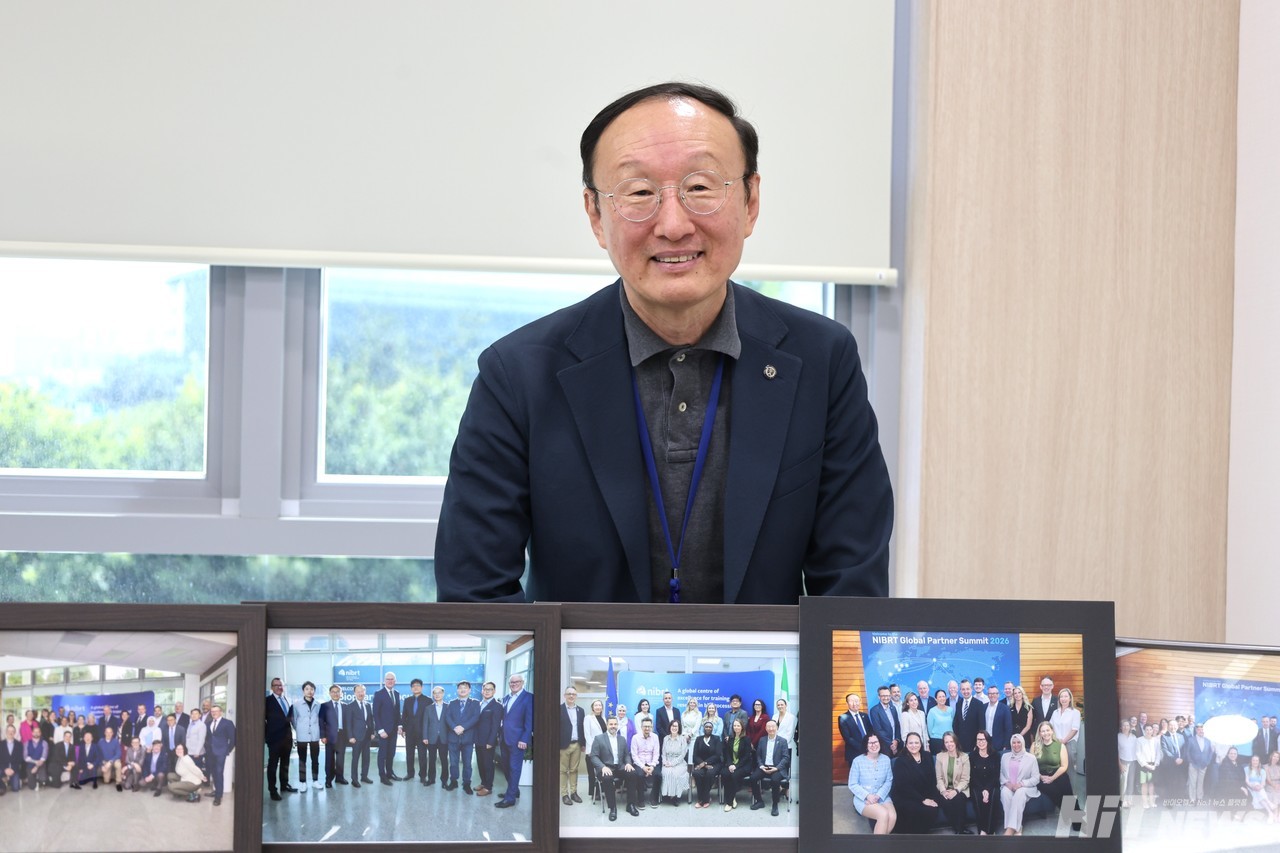
K-NIBRT Project Division Director Han Gyun-hee / Photo: Reporter Hwang Jae-seon
"The K-NIBRT project is the first initiative in which the Ministry of Trade, Industry and Energy and the Ministry of Health and Welfare pursued a shared goal — cultivating global bioprocess talent — and shared the resulting outcomes. Both ministries recognized that Ireland's NIBRT model was important for workforce development in Korea's bio industry, and judged that linking each other's hardware and software would be more efficient than running separate, independent projects. Both ministries provided budgets exceeding 30 billion KRW each.
The Ministry of Trade, Industry and Energy, together with Incheon City, supported the hardware side — funding the construction of the Bioprocess Workforce Training Center and the facilities and equipment needed for training. The Ministry of Health and Welfare, together with Yonsei University, supported the software side — developing training content, localizing NIBRT's curriculum for Korea, and building facilities to train personnel in advanced biopharmaceuticals and automation (Biopharma 4.0) for training that couldn't be conducted at the Bioprocess Workforce Training Center.
Before the two centers were completed last year, the program operated out of a renovated archive space (roughly 1,190 square meters) in the basement of Yonsei's Underwood Memorial Library. During this period, training was run as a pilot program, reaching a maximum of about 600 trainees per year through 2024.
The pilot training facility consisted of a microbial culture room, an animal cell culture room (a near-GMP facility with AHU-managed air handling), a purification room, a fill/finish room, an analytical lab, and a utility room. This space was used to provide training for antibody and vaccine processes, and is currently being converted into a training space for gene therapy products."
Please introduce the key infrastructure and operating policies of the new centers.
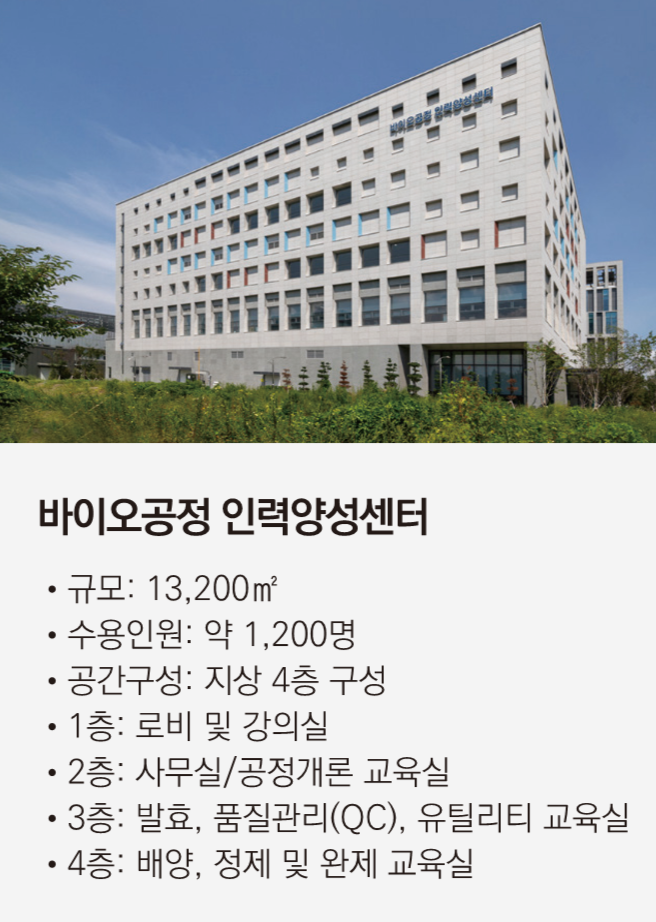
"The Bioprocessing Technology Training Center and the Biopharma Research Center received usage approval in January of last year, went through three months of pilot operation, and began full-scale training that May. As of now, exactly one year has passed.
The Bioprocessing Technology Training Center was built with a total project cost of 67.7 billion KRW. The center spans one basement level and four above-ground floors, totaling 6,598 square meters (roughly 2,000 pyeong), and includes an animal cell culture room built to GMP standards, a preparation room, a basic culture room, and a single-use bioreactor room.
The purification room is equipped with filtration and purification equipment (three Cytiva Ävant units and two pilot-scale units), along with aseptic filling facilities comparable to those used in industry. The analytical lab is divided into physicochemical, microbiological, and animal-cell analysis rooms.
The Biopharma Research Center, which opened alongside it, was established within Yonsei Science Park to support research, industry-academia collaboration, and K-NIBRT training. The center spans 18,101 square meters and includes lecture rooms, GMP training rooms, and open-innovation lab space for biopharmaceutical ventures, with floors four through six slated for future occupancy by bio-related companies. Its total project cost was 65 billion KRW.
The two centers were built separately because of differing GMP grade requirements. The Bioprocesssing Technology Training Center is focused on antibody process training and operates under 'Grade D' GMP standards, while the Pharma-Bio Convergence Research Center was built to 'Grade B' standards to support cell and gene therapy training. Trainees wear actual cleanroom gowning and train within genuine GMP environments, improving their readiness for real-world work settings.
The scale of equipment has grown from roughly 10 billion KRW at the former pilot training facility to 10–15 billion KRW at each of the three centers — an overall increase of about threefold.
With dedicated space now permanently allocated for each training modality, there is no longer a need to reconfigure equipment in the practicum center, which has significantly reduced the workload for faculty and administrative staff. Another major improvement is that hands-on training groups, previously formed with five trainees each, have now been reduced to groups of three, expanding hands-on opportunities per trainee.
Going forward, I believe we'll be well positioned to meet demand for practical training directly linked to industry needs, and to fully localize and deliver Ireland's NIBRT curriculum in a Korean context."
About a year has passed since the new centers began pilot operation last May. What have the results been, and what feedback have trainees given?
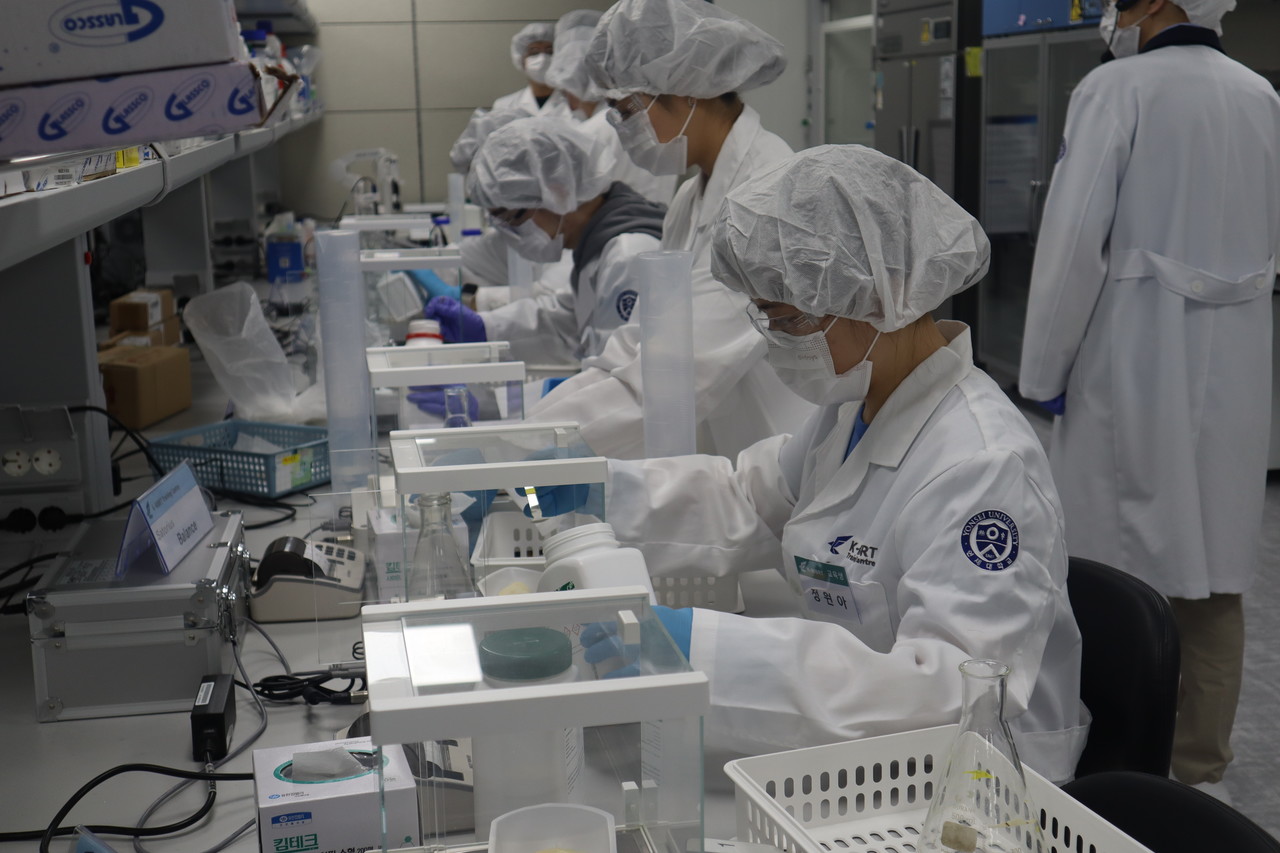
Cohort 2 Bio-All trainees conducting analytical practicum training.
"Since every facility across our training spaces has been built to GMP standards, the number of trainees we can accommodate has grown substantially. What was once a maximum of 600 trainees annually can now comfortably reach 2,000.
The number of training courses has also grown, from 18 last year to more than 30 this year, with as many as five courses running simultaneously at times. We're now able to provide sufficient training for currently employed staff at companies that had been demanding internationally competitive programs.
We're currently collaborating with a major bio company based in Songdo to provide online training content and help introduce in-house training programs. Starting this year, we plan to expand this to include job-competency training for new hires as well.
In addition, students from two bio meister high schools in Incheon participate in K-NIBRT practicum training at least twice a year. A significant number of graduates have gone on to secure jobs at major companies such as Samsung Biologics, and demand for training continues to grow.
I believe this kind of participation from related companies and institutions is itself evidence that the K-NIBRT project is being run successfully."
As the scale of the project has grown, it seems more personnel and budget would be needed.
"That's right. At minimum, about 6 billion KRW per year is needed to keep the centers running normally (3 billion KRW for facility maintenance plus 3 billion KRW for training operations). A single session of aseptic filling training alone costs roughly 20–30 million KRW in materials, and endotoxin test reagents alone cost about 18 million KRW. Trainee tuition of around 3 million KRW isn't even enough to cover material costs, so we rely on government support to operate.
The Division currently consists of six full-time Yonsei University faculty and ten dedicated training faculty. In addition, four Yonsei University staff members work alongside them to support the smooth operation of the project. Given the rapid growth in the number of training courses, we're planning to hire two additional staff next year, and we're also considering further hiring depending on the budget situation."
Songdo is emerging as a global bio cluster. What is the K-NIBRT Project Division's top priority in supporting this?
"The K-NIBRT Project Division's first mission statement is to cultivate the talent the bio industry needs. In line with this, we've made workforce development in the antibody field — where demand is currently highest — a key goal.
Evaluators who previously visited to inspect the infrastructure built under the Biopharma 4.0 project also expressed strong satisfaction, while actively raising the need to resolve field-level technical challenges through the use of advanced equipment.
Cohort 2 Bio-All trainees are shown conducting analytical practicum training. Once we've addressed our top-priority mission, we plan to put our training infrastructure to use in research as well — supporting raw and subsidiary material manufacturers in resolving technical challenges, and contributing to R&D in advanced biopharmaceuticals — so that alongside education, we can also achieve the industrial goal of supporting the broader ecosystem."
As part of becoming a 'global bio workforce training hub,' you're also training international trainees. Can we expect K-NIBRT to take on a role as a global training institution?
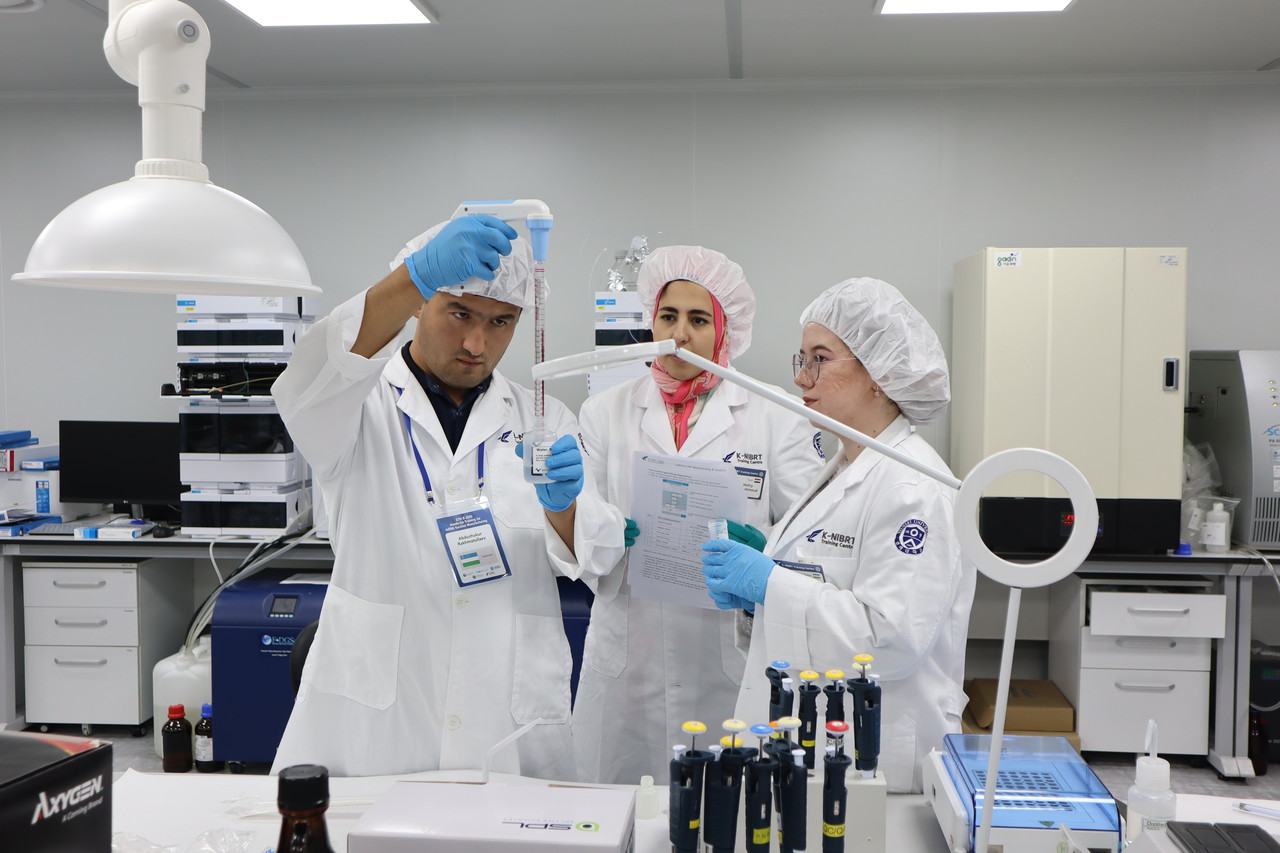
Foreign trainees participating in WHO GTH-B training take part in hands-on practicum sessions.
"Recently, initiatives such as the WHO's Global Training Hub for Biomanufacturing (GTH-B) have called for greater support and workforce development for low- and middle-income countries (LMICs). This goes beyond simple assistance — it means helping LMICs build the capacity to produce and supply their own vaccines, and helping ensure that domestically developed Korean technologies are prioritized within those vaccine portfolios.
Korea is now in a position to provide this kind of support, and we aim to contribute to LMICs through mission-based training rather than training driven purely by market demand. I believe the various international vaccine training programs our Division is currently running will serve as an important catalyst for achieving this goal."
The government has declared a goal of making Korea one of the world's top five bio powerhouses by 2030. What is K-NIBRT's goal?
"Our goal is to establish ourselves as a globally recognized bio workforce training institution. Rather than recognition based simply on numbers, we want to be recognized as a demand-driven institution for cultivating and supplying talent. We also aim to position ourselves as an essential pillar of Korea's bio ecosystem by resolving field-level technical challenges and contributing to R&D in advanced biopharmaceuticals.
To achieve this, sustained attention and investment from both the government and industry are urgently needed. We intend to grow into a sustainable institution — one that becomes an essential and indispensable pillar of workforce development for Korea's bio industry."
Source: HIT News (https://www.hitnews.co.kr/news/articleView.html?idxno=77259)
- There are no registered comments